



A care assessment is the first step to getting the right support.
What Is a Care Assessment?
If you're exploring care at home for the first time — whether for yourself or someone you love — the idea of a care assessment can feel a little daunting. You might be wondering what it involves, who carries it out, or whether it means giving up control over how things are done at home. The good news is that a care assessment is simply a conversation. It's designed to understand what support would make the biggest difference, and it puts you firmly in the driving seat.
A care assessment looks at the everyday tasks that have become difficult — things like getting washed and dressed, preparing meals, managing medication, or simply feeling safe and confident at home. It also considers what matters most to you: your routines, your preferences, and the things that help you feel like yourself. Whether you live in Chesterfield, Bolsover, or one of the villages dotted across North East Derbyshire, the aim is always the same — to build a picture of your life so that any support fits around it, not the other way round.

Who Carries Out the Assessment?
There are two main types of care assessment you might come across, and it helps to know the difference.
The first is a local authority needs assessment, carried out by your council's adult social care team. If you or a family member contact Derbyshire County Council to ask about care, they have a legal duty to assess your needs regardless of your financial situation. This assessment determines what support you're eligible for and whether the council will fund some or all of it. You can request one by telephoning the council directly or asking your GP to make a referral.
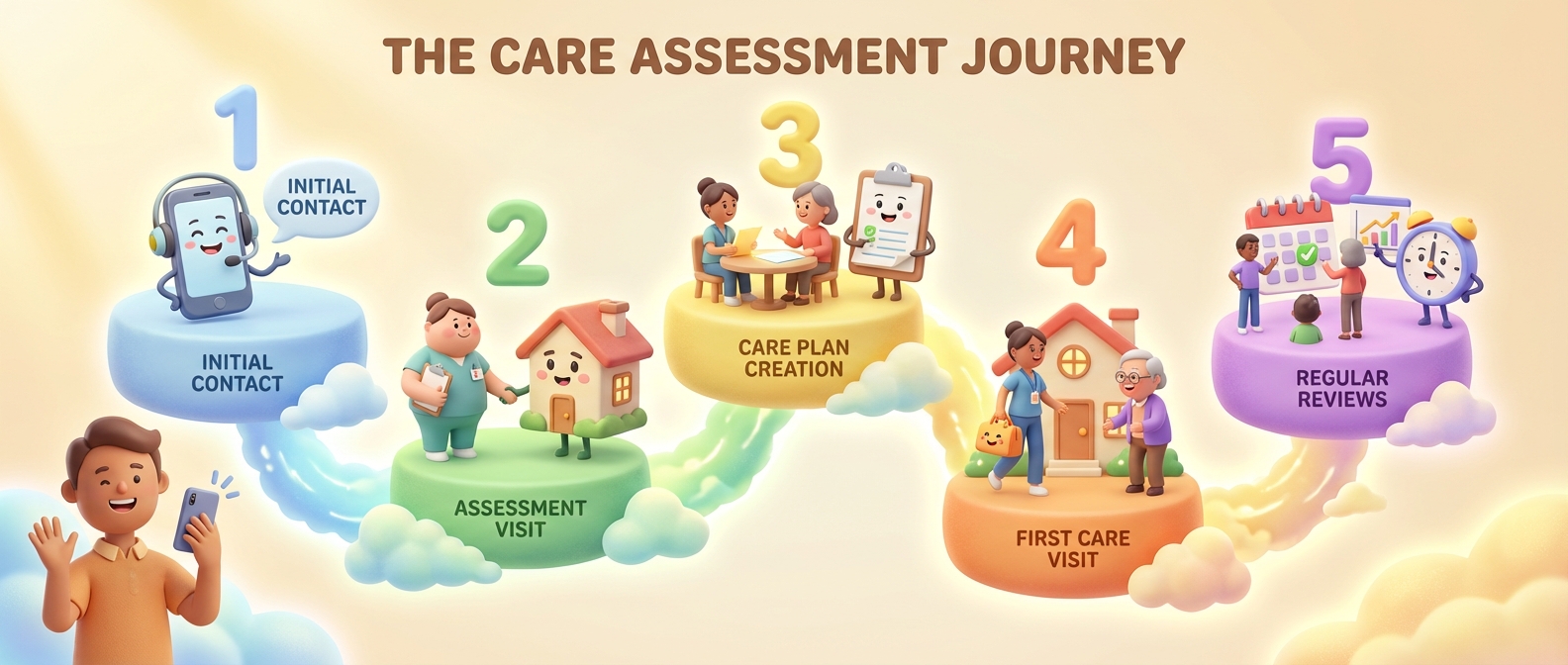
The second is a care provider assessment, sometimes called an initial assessment or care planning visit. This is carried out by the domiciliary care provider you've chosen — or are considering — and it's where the practical detail really comes to life. A senior carer or care coordinator will visit you at home, usually for around an hour, to talk through your needs in a relaxed, unhurried way. They'll ask about your health, your daily routine, any risks in the home, and what outcomes you'd like from your care. This visit is also your chance to ask questions and get a feel for whether the provider is the right fit.
Many families across Mansfield, Worksop, and the surrounding areas arrange both types of assessment. They work hand in hand — the council assessment establishes eligibility and funding, while the provider assessment shapes the actual care plan that guides your carers day to day.
What Questions Will You Be Asked?
It's perfectly natural to feel a bit self-conscious about discussing personal care needs with someone you've just met. A good assessor will understand this and take things at your pace. They're not there to judge — they're there to listen.
You can expect questions around:
Your physical health — any conditions, mobility difficulties, or recent hospital stays. If you've had a fall at home or a spell in Chesterfield Royal, for example, this is important context that helps shape safe, practical support.
Personal care — whether you need help with washing, dressing, toileting, or skin care. These conversations are handled sensitively, and you only need to share what you're comfortable with at first.
Nutrition and hydration — whether you're eating and drinking well, and whether meal preparation has become a struggle. For many older people living alone, this is one of the first areas where a little help makes an enormous difference.
Medication — what you take, when, and whether you need prompting or assistance to manage it safely.
Your emotional wellbeing — how you're feeling in yourself, whether you're getting out and about, and whether loneliness or low mood is a concern. Domiciliary care isn't only about physical tasks; companionship and reassurance matter just as much.
Your home environment — a brief look at access, lighting, trip hazards, and anything that might need adapting. This isn't an inspection — it's about making sure your carers can support you safely.
What you enjoy — your interests, your social connections, the things that give your week shape and meaning. The best care plans are built around these details, not just around needs.
How to Prepare (Without Overthinking It)
You don't need to revise for a care assessment — it's not a test. But a little preparation can help you feel more confident and ensure nothing important gets missed.
It's worth having a list of your current medications to hand, along with any relevant letters from your GP or hospital consultant. If you've had occupational therapy input or already use equipment like a walking frame or stairlift, mention this early on.
Think about which parts of the day feel hardest. Is it the mornings? Mealtimes? The evenings when the house feels quiet? Knowing where the pressure points are helps the assessor recommend the right level of support — whether that's a short visit to help you start the day or a longer call that includes companionship and a home-cooked meal.
If a family member or friend usually helps out, it's helpful for them to be present too. They often notice things you might not mention yourself, and the assessment can also consider their needs as an informal carer. Carer burnout is real, and a good assessment will acknowledge the strain that family members carry — particularly those juggling care with work or raising children of their own.
Write down any questions you have beforehand. There are no silly questions, and a provider worth choosing will welcome every one of them.
What Happens After the Assessment?
Following the visit, the provider will draw up a personalised care plan. This is a detailed document that sets out exactly what support will be provided, when, and how. It covers everything from the tasks your carers will carry out to the way you prefer things done — right down to how you take your tea.
Your care plan is a living document. It should be reviewed regularly and updated whenever your needs change. If you come home from hospital with new requirements, or if you're having a good spell and want to do more independently, your plan should reflect that. The best domiciliary care adapts with you, not against you.
For families across North East Derbyshire — from the market towns of Bolsover and Mansfield to the quieter villages around Worksop and beyond — the care plan becomes a shared reference point. It gives everyone involved, including family members who live further away, clarity and confidence that the right support is in place.
You Don't Have to Navigate This Alone
Arranging care at home can feel overwhelming, especially when you're doing it for the first time or during a difficult period. But it doesn't have to be something you face on your own. A care assessment is the starting point — a straightforward, supportive conversation that helps turn uncertainty into a clear plan.
If you're considering domiciliary care for yourself or a loved one in North East Derbyshire, we'd be glad to talk things through. Whether you're ready for a full assessment or simply want to ask a few questions over the phone, The Right Home Care Team is here to help — no pressure, no obligation, just honest guidance from people who understand what families in our community are going through.


