



Few decisions feel as weighty as choosing the right care for a parent or partner, and the Care Quality Commission's website is often the first place families turn. The trouble is, behind those colour-coded ratings sits a lot of jargon, and it isn't always clear what really separates a good provider from a truly outstanding one. In this guide we break down what each CQC rating actually means in 2026, the changes families should be aware of, and the practical questions to ask any home care provider before you sign anything.

What the CQC actually does (and what it doesn't)
The Care Quality Commission is the independent regulator of health and adult social care in England. Every domiciliary care agency operating legally in places like Chesterfield, Bolsover, Worksop and Mansfield must be registered with the CQC, and that registration is the absolute baseline. It means the provider has been vetted, has a registered manager in place, and is subject to inspection.
What the CQC does not do is recommend one provider over another, or check in every week. Inspections happen periodically, and a published rating reflects what inspectors found on the day they visited and in the evidence they gathered around it. That's why a CQC report is a useful starting point — not the whole story.

The ratings, in plain English
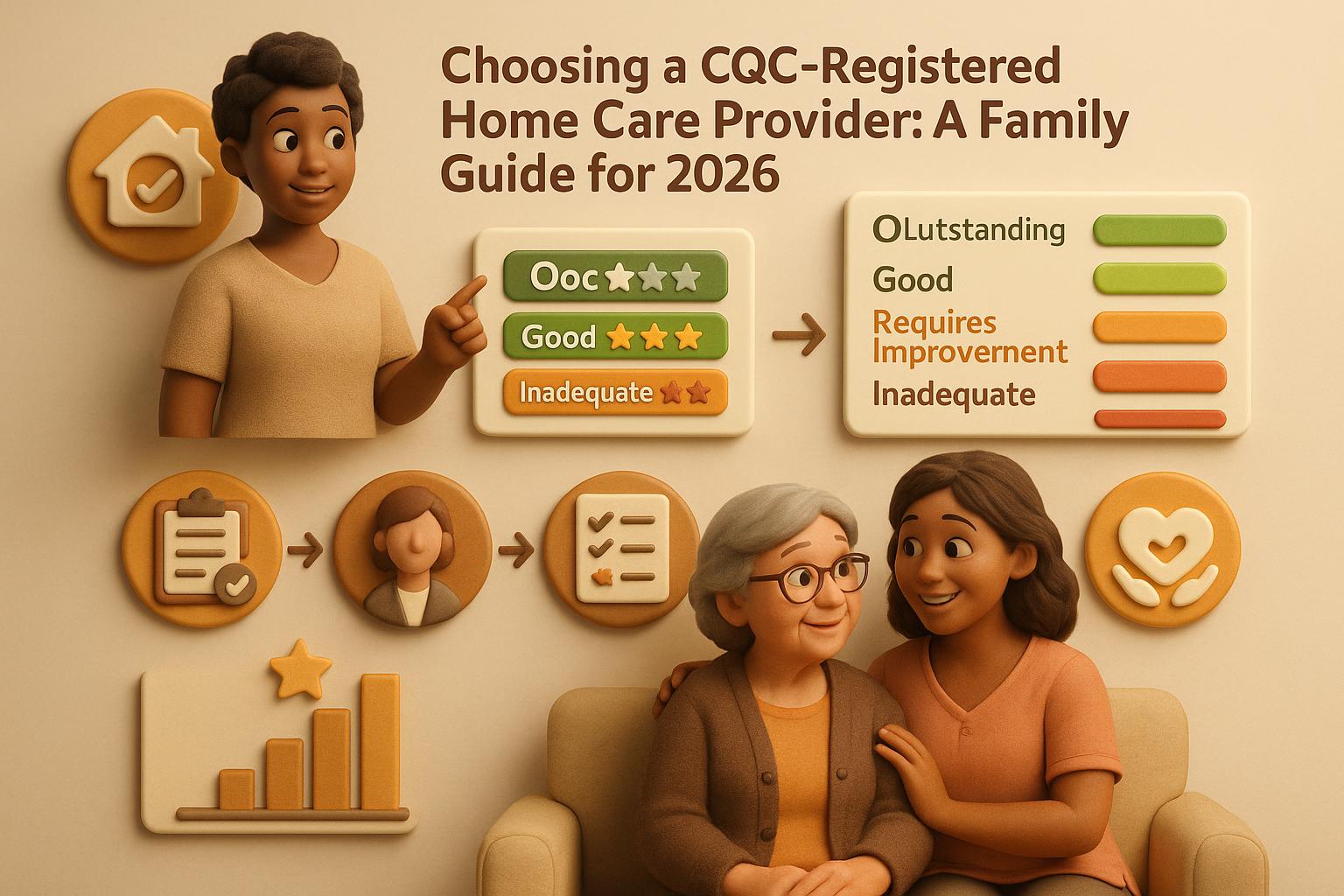
Every registered provider is assessed against five key questions: is the service safe, effective, caring, responsive, and well-led? Each gets one of four ratings, and those combine into an overall rating.
Outstanding means the service goes well beyond expectations — innovative, person-centred, and a genuine leader in its field. Only a small percentage of home care providers ever earn this in any one of the five areas.
Good means the service is doing what a good provider should: safe, kind, properly led, and meeting people's needs reliably. The majority of well-run agencies sit here, and "Good" is genuinely something to be proud of.
Requires improvement means inspectors found shortfalls that need addressing. It isn't necessarily a red flag on its own — context matters — but it does warrant questions.
Inadequate is the most serious rating and triggers close monitoring or enforcement action. We'd encourage real caution here.
What's changed in 2026
If you last looked at the CQC website a couple of years ago, you'll notice things look a little different. Following a long period of reform, the CQC has been steadily refining how it presents assessments, and inspectors are placing more weight on the lived experience of people using the service — what care actually feels like for the person in their own home, not just what's written in the policy folder.
For families, the practical upshot is simple: read the narrative sections of a report, not just the headline rating. The published commentary about how staff treat people, how feedback is handled, and how well the registered manager knows their team often tells you more than the colour at the top of the page.
Beyond the rating: what really matters
A glowing CQC report is reassuring, but a few other things matter just as much when you're choosing domiciliary care for someone you love.
Continuity of carers. Will the same one or two familiar faces visit, or will it be a rotating cast? For someone living with dementia, or simply someone who values their privacy, continuity is everything.
Local roots. A team based in North East Derbyshire understands the area, the GP surgeries, the district nursing arrangements and the small practical things — like which villages have tricky parking or where the nearest pharmacy is in Bolsover on a Sunday. National brands can feel polished on paper, but local providers often deliver more responsive care.
How staff are treated. It sounds counter-intuitive, but the way a provider looks after its carers is one of the strongest predictors of the care your relative will receive. Ask about training, supervision, and whether staff are paid for travel time. Rushed, underpaid carers cannot give their best, no matter how kind they are.
How concerns are handled. Every provider gets things wrong occasionally. What matters is what happens next. A good agency welcomes feedback and uses it to improve.
Questions worth asking
When you ring round or meet with potential providers across Chesterfield, Mansfield and the surrounding villages, these questions tend to draw out the most useful answers:
Who will actually be coming through the door, and how many different carers should we expect in a typical fortnight? Can we meet the team before care starts? How are visits scheduled, and what happens if a carer is running late or off sick? How do you handle medication, and what training do staff have for specific conditions like Parkinson's, dementia or end-of-life care? What does your complaints process look like, and can you tell me about a time you got something wrong and how you put it right?
The answers will tell you a great deal — not just about competence, but about culture.
Reading between the lines of a CQC report
When you do sit down with a report, look for specifics rather than platitudes. Quotes from people receiving care and from relatives are gold. Comments about staff knowing people's preferences, anticipating needs, or going out of their way during difficult moments tell you what the service is really like. Equally, look at how the provider has responded to any criticism — has action been taken, or are the same issues recurring across inspections?
It's also worth checking when the most recent assessment was carried out. Services change, sometimes quickly. A two-year-old rating tells you less than a recent one, and many providers proactively share more recent feedback from families and professionals on their own websites.
Trust your instincts
Finally, after all the paperwork and ratings, pay attention to how a provider makes you feel when you first speak to them. Do they listen properly? Do they ask about your relative as a person, not just a list of tasks? Are they honest about what they can and can't do? Care is, at heart, a deeply human relationship — and the right provider will feel that way from the very first conversation.
A gentle next step
If you're weighing up home care options in Chesterfield, Bolsover, Worksop, Mansfield or anywhere across North East Derbyshire, we'd be glad to talk things through with you — no pressure, no hard sell. Sometimes a quiet conversation over a cup of tea is the most useful place to start. Get in touch with The Right Home Care Team whenever you're ready, and we'll help you think it through.


