



Behind every great care visit is a dedicated professional.
What Does a Home Care Worker Actually Do?
When people think of home care, they often picture someone popping in to make a cup of tea or help with the shopping. And yes, those things matter — more than most people realise. But the role of a home care worker runs far deeper than a list of tasks on a care plan. It's about trust, dignity, and the kind of quiet compassion that can transform someone's day.
Here in North East Derbyshire, our care workers visit people in their own homes across Chesterfield, Bolsover, Worksop, Mansfield, and the surrounding villages. They step into someone's most personal space — their home — and they do so with respect, warmth, and genuine care. It's a role that asks a great deal of a person, and it gives a great deal back.

The Heart of Domiciliary Care
Domiciliary care — care provided in a person's own home — exists so that people can stay where they feel safest and most comfortable. For many older adults and those living with disabilities or long-term conditions, remaining at home isn't just a preference. It's essential to their wellbeing, their independence, and their sense of self.
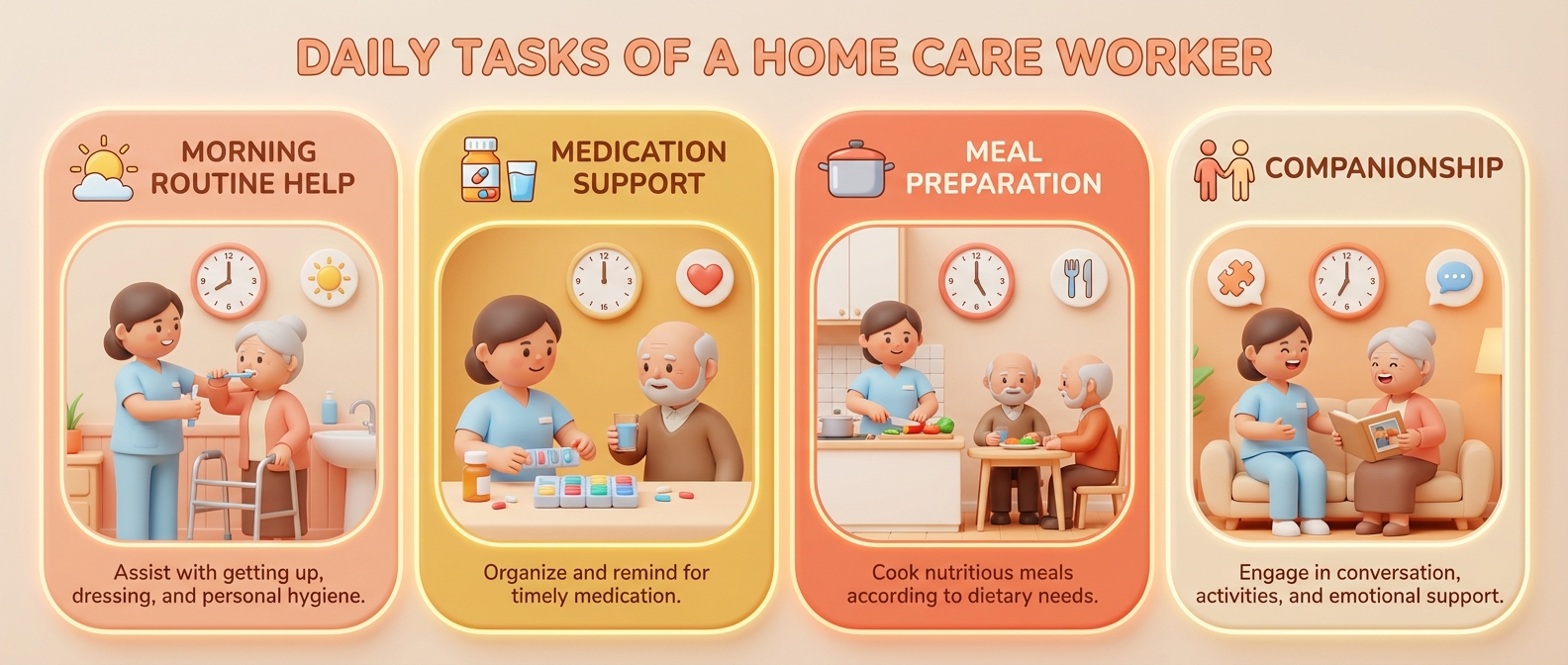
A home care worker makes that possible. On any given day, they might help someone get washed and dressed in the morning, prepare a meal, administer medication, or support them with mobility. But what families often tell us matters most isn't the practical help — it's the relationship. It's knowing that the person walking through the door genuinely cares about their mum, their dad, their partner.
That consistency of care makes an enormous difference. When you see the same familiar face arriving each morning, someone who remembers how you take your tea and asks after your grandchildren, that's not just a service. That's companionship. And for people who might otherwise go hours or even days without meaningful human contact, it can be a lifeline.
A Day in the Life
There's no such thing as a typical day for a home care worker, and that's part of what makes the role so rewarding — and so demanding. Mornings might start early, helping clients get ready for the day with personal care, breakfast, and medication. Lunchtime visits could involve preparing a hot meal and sitting down for a chat. Evening calls might focus on helping someone settle comfortably for the night.
Between visits, our care workers travel across North East Derbyshire, sometimes navigating narrow lanes in rural villages between Bolsover and Chesterfield, or crossing into Nottinghamshire to reach clients in Worksop and Mansfield. The work requires patience, adaptability, and a calm head — because no two visits are ever quite the same.
Some days are straightforward. Others are more challenging. A client might be feeling anxious or confused. They might have had a fall, or they might simply need someone to listen. Good care workers read the room, adjust their approach, and respond to the person in front of them — not just the care plan on the clipboard.
The Skills That Matter Most
You don't need a medical degree to become a home care worker, but you do need something that can't be taught from a textbook: empathy. The best care workers are people who instinctively understand how it feels to need help, and who can offer that help without making someone feel diminished by it.
Beyond empathy, the role calls for practical skills too. Care workers need to be confident with moving and handling, medication management, and recognising changes in a person's condition that might need attention. Training covers all of this — including specialist areas like dementia care, end-of-life support, and safeguarding — but the foundation is always that human connection.
If you're considering a career in care, here's what we'd say: if you're the sort of person who checks on your neighbour, who listens properly, who stays calm when things get difficult — you already have the most important qualities. Everything else, we can teach you.
What Families Should Look For
If you're exploring home care options for a loved one, it can feel overwhelming. There are questions about funding, assessments, and care plans — and underneath all of that, there's the very human worry of entrusting someone you love to a stranger's care.
Here are a few things worth considering when choosing a domiciliary care provider:
Consistency of carers. Ask whether your loved one will see the same care workers regularly. Continuity builds trust and means the carer truly gets to know the person they're supporting.
Person-centred care. A good provider will take time to understand your loved one as a whole person — their preferences, their routines, their life history — not just their care needs.
Communication. You should feel confident that you can pick up the phone and speak to someone who knows your loved one's care. Regular updates and open, honest communication make all the difference.
Local knowledge. A provider rooted in the local community understands the area, the services available, and the particular needs of people living here. Whether your loved one is in a terraced house in Chesterfield or a cottage outside Bolsover, local matters.
CQC registration. All domiciliary care providers in England must be registered with the Care Quality Commission. Check their latest inspection report — it's publicly available and gives you an honest picture of the service.
More Than Just a Job
We titled this article "more than just a job" because that's what every care worker we've ever spoken to will tell you. Yes, it's work. Yes, it can be physically tiring and emotionally demanding. But it's also one of the most meaningful things a person can do with their working life.
Our care workers describe moments that stay with them: the client who hadn't smiled in weeks suddenly laughing at a shared joke. The family member who rings to say thank you, voice cracking with gratitude. The quiet satisfaction of knowing that because of you, someone was safe, comfortable, and not alone today.
In communities like ours across North East Derbyshire, home care workers are the backbone of social care. They're the people who make it possible for your grandmother to stay in the home she's lived in for fifty years. They're the reason your father can maintain his independence after a stroke. They do extraordinary work, often unseen, and they deserve to be recognised for it.
Get in Touch
If you're looking into home care for a loved one in Chesterfield, Bolsover, Worksop, Mansfield, or anywhere across North East Derbyshire, we'd be happy to have a conversation. There's no pressure and no obligation — just a friendly chat about what support might look like and how we can help.
And if you're someone who's been thinking about a career in care, we'd love to hear from you too. It's not always easy, but it is always worthwhile. Get in touch with The Right Home Care Team and find out what a difference you could make.


